
Wooden Stamp vs Self-Inking Stamp for Packaging: Which One to Choose (and When Neither Is the Right Answer)


An order comes in. You open your laptop, check the details, pack the product, and reach that moment where only one thing is missing: your brand. The name, the logo, something that says "this isn't just any box, this is my brand." And that's when the question comes up that almost every small business asks sooner or later: wooden stamp or self-inking stamp?
The short answer: it depends on how many packages you ship per week, the visual effect you want to convey, and how much time you're willing to spend per order. The long answer is below, without crowning either one as "the best," because there is no best in absolute terms. There's only the best for your situation.
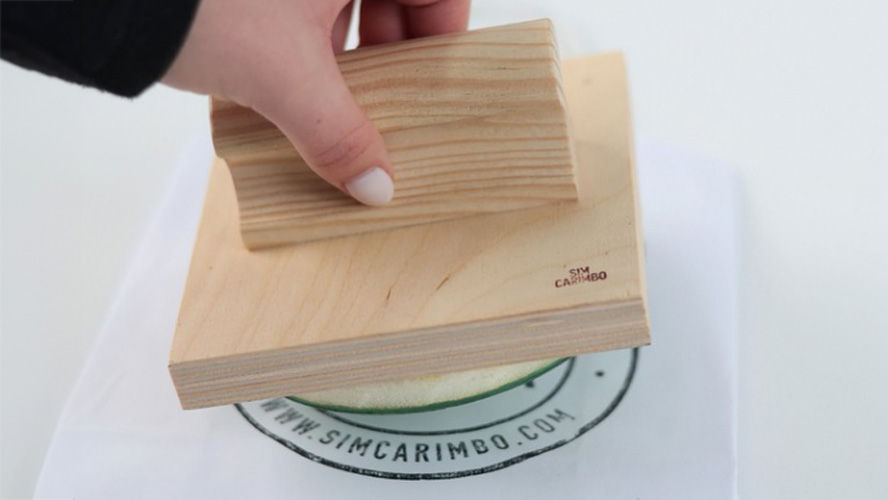
Wooden stamp: when it makes sense
The wooden stamp is the more traditional of the two. It works with a separate ink pad: you press the stamp onto the pad, then onto the surface, and repeat with each use.
It makes sense to choose this option when:
Your volume is low to moderate. Up to around 20–30 packages per week, the extra time spent re-inking manually doesn't really affect your day.
Your budget is tighter. Wooden stamps are generally more affordable than their self-inking equivalents.
The handmade effect is a feature, not a flaw. Manual stamps produce a slightly less uniform impression — subtle variations in pressure and ink from one print to the next. In niches like natural cosmetics, ceramics, artisan food products, or brands built around a "handmade" identity, that imperfection reinforces the brand story rather than undermining it.
You want to use the same stamp on different materials. By simply swapping the ink pad (standard, textile, multi-surface), the same wooden stamp works on paper, cardboard, fabric, wood, and even glass or plastic — without needing a new stamp for each surface.
The trade-off is obvious: each impression takes a few extra seconds compared to a self-inking stamp, and visual consistency depends partly on who's doing the stamping. If you have a team packing orders, it's worth testing it yourself first before delegating.

Self-inking stamp: when it makes sense
The self-inking stamp has the ink pad built into the mechanism. You press once, no manual re-inking needed, and every impression comes out the same.
It makes sense to choose this option when:
Your volume is high. Once you're shipping several dozen packages a week, the time difference per impression starts adding up to meaningful minutes in your day.
You need absolute consistency. If your brand works with a very clean, uniform visual identity — small text, a logo with fine detail — the self-inking stamp ensures that impression #1 looks identical to impression #500.
More than one person is doing the packing. It removes the human variable of manual re-inking, making it easier to train a team without losing quality.
You also stamp documents regularly, beyond packaging. If you also need to stamp invoices, addresses, or other documents, self-inking stamps tend to last far more impressions before needing a refill.
The trade-off here: it's a higher upfront investment, and it's typically limited to a single surface type (paper or cardboard, as a rule) — you don't have the same flexibility to swap pads for fabric or glass the way you do with a manual stamp.
The question nobody asks: what if the problem isn't the stamp at all?
Here's something worth pausing on before choosing between the two: sometimes a poor stamping result has nothing to do with the type of stamp. It has to do with the wrong combination of ink and material.
It's a common mistake: buying the right stamp, but using the wrong ink for the surface. Standard ink on non-absorbent surfaces like plastic, glass, or metal never dries properly and ends up smearing. On kraft paper, cardboard, or fabric, that same standard ink works perfectly. The choice of stamp (wooden vs self-inking) is secondary to choosing the right ink for the material you're marking.
If you're still unsure which ink to use depending on your packaging material, our complete guide to inks and materials goes into exactly this.
When neither option is the right answer
There are situations where neither a wooden stamp nor a self-inking stamp is the right choice — and we say this even as a stamp shop.
Very high and consistent volume (hundreds of units per week). At that scale, it's worth considering factory-printed packaging instead. Stamps still make sense for variable details (dates, batch numbers, personalised messages), but as the sole solution for the full volume, they're no longer the most efficient option.
You need to mark very irregular or curved surfaces. Stamps work best on flat or slightly curved surfaces. On highly irregular shapes, the impression may come out incomplete regardless of which type of stamp you use.
You only need to stamp once or very few times. If it's for a one-off event or a very small run, it may make more sense to simply get a direct print quote on the packaging, rather than investing in a stamp you'll only use once.
Quick decision table
Your situation... | Recommendation |
Small artisan business, up to ~30 packages/week, values the handmade touch | Wooden stamp |
Brand with a very clean visual identity, several dozen packages/week or more | Self-inking stamp |
Team of multiple people packing, needs consistency | Self-inking stamp |
Wants to use the same stamp on paper, fabric, and other surfaces | Wooden stamp (with different ink pads) |
Hundreds of units per week, very high volume | Consider pre-printed packaging + stamp only for variable details |
One-off order or very small run | Evaluate direct printing instead of a stamp |
In the end, the right choice isn't the one that looks most professional or most complete at first glance — it's the one that fits your real volume, your budget, and the visual effect you want for your brand. If you're still unsure after all this, talk to us: we know both sides because we sell both, and we'd rather sell you what you actually need than what has the better margin.
Comments